Weekly Portion Vayera
October 31, 2026
Sample of free illustrations for download
Parashat Vayera “He Appeared” וַיֵּרָא Genesis 18:1-22:24 is the 4th weekly Torah portion in the annual Jewish cycle of Torah reading which begins after
Rosh Ha Shana, the Jewish New Year.
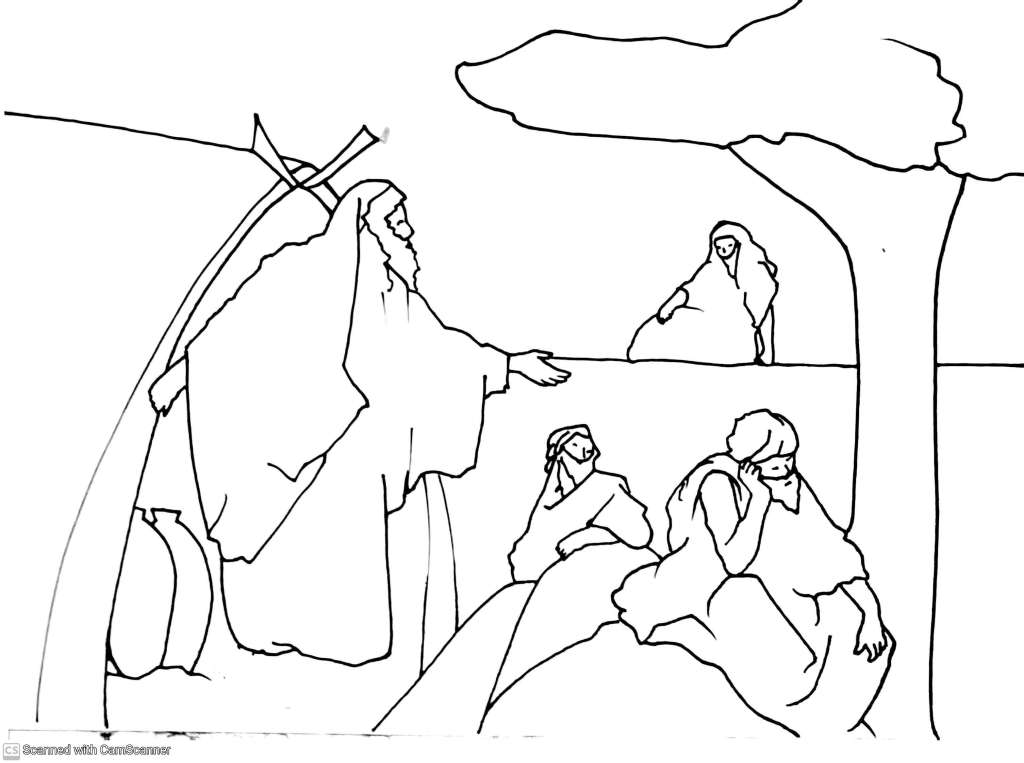
It begins as guests who are actually angels, tell Abraham that Sara will have a child.
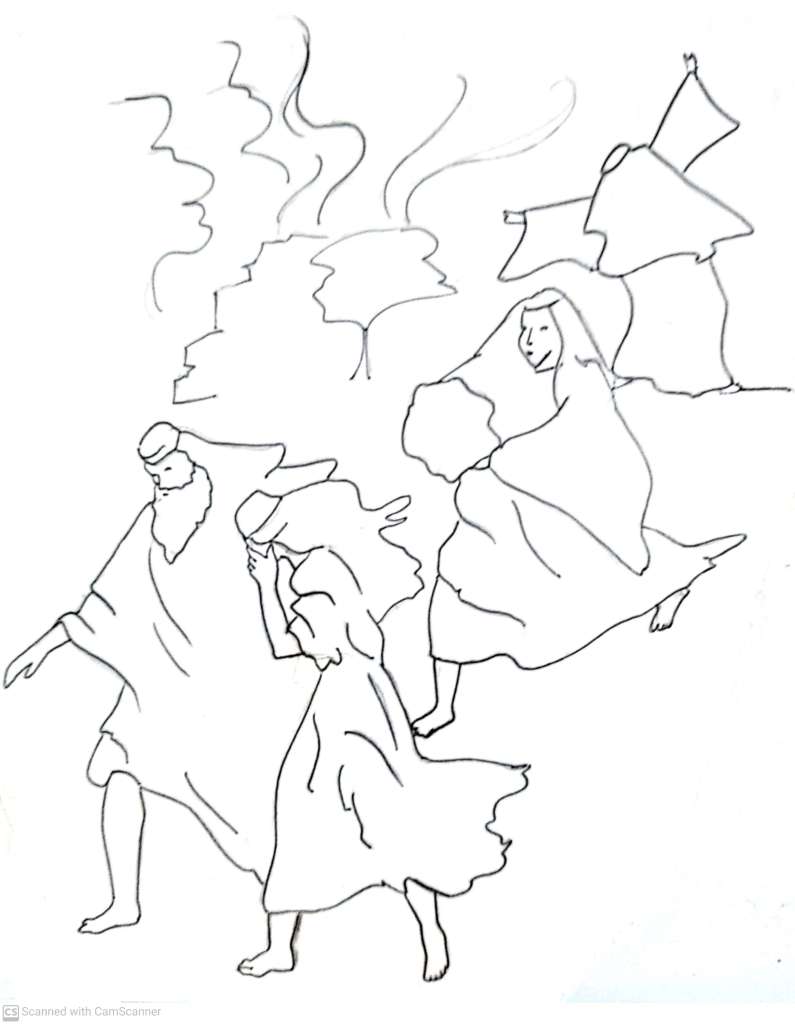
G-d destroys Sodom and Gomorrah, but is convinced by Abraham not to destroy its inhabitants, of which his brother's son, Lot, is one. Lot's wife looks back and is turned into a pillar of salt.
Sara gives birth to Isaac.
G-d commands that Abraham sacrifice Isaac, but in the eleventh hour takes a ram instead.
Vayera Tallit

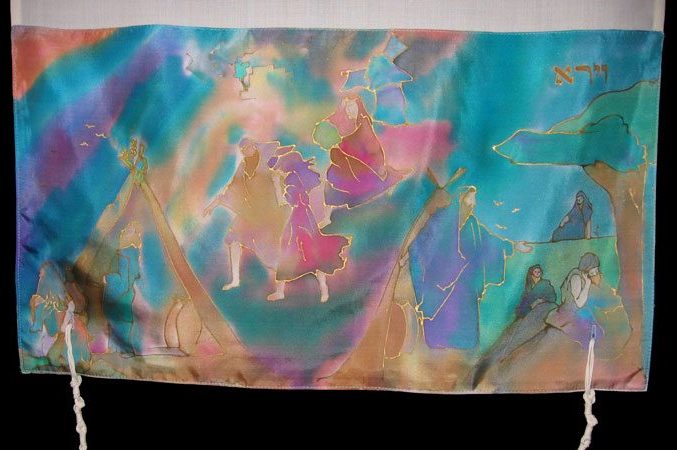
Band I Scene I (on right) takes place at the home of Abraham and Sarah, where they are receiving guests, who are, in fact, angels who bring Sarah the message that she is to have a child.
Band I Scene II (on left) is the destruction of Sodom. Lot and his daughters are escaping, but Lot’s wife, who looks back, has turned to stone.
Band I Scene III Abraham banishes Hagar and Ishmael.
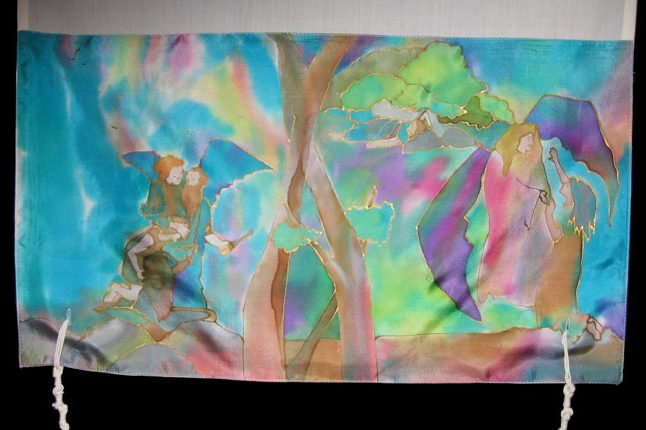
Band II Scene I (on right) is in the desert wilderness of Beersheba where Hagar and Ishmael have gone astray, and are about to die. An angel of G-d descends, rescues them, and promises her a nation.
Band II Scene II (on left) is the story of G-d’s test of Abraham and the sacrifice of Isaac. The scene is based on a 1655 etching by Rembrandt.

